
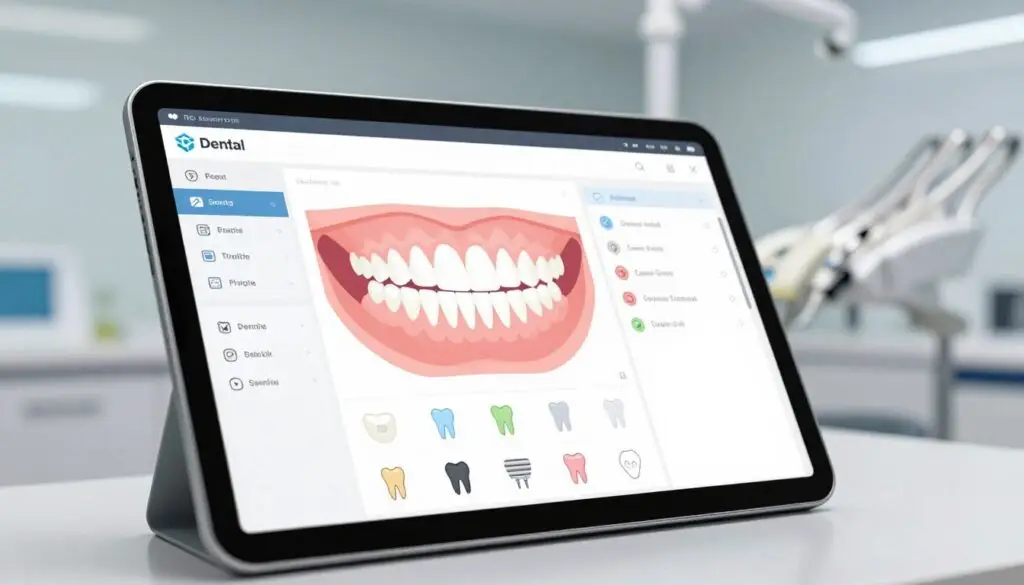
I am exploring how modern technology can transform daily operations for small dental practices across the United States. The shift from manual tasks to patient-focused care is now a reality.
Effective clinical documentation is essential for maintaining high standards. Tools like Twofold Health, offering structured notes starting at $69 monthly, are simplifying this process.
My goal is to provide a neutral overview. These systems improve clinical record-keeping and overall practice efficiency for busy teams. DentScribe, for example, holds a U.S. patent for its automated SOAP note technology.
By leveraging this advancement, clinicians can focus more on the patient experience. It reduces hours spent on manual data entry. This guide examines solutions that streamline the complex requirements of modern charting.
Key Takeaways
- Modern tools are transforming daily workflows in small dental offices.
- Accurate and efficient documentation is critical for quality patient care.
- New systems automate clinical note-taking, saving significant time.
- Focus can shift from administrative tasks back to the patient experience.
- Solutions are available at various price points to fit different practice needs.
- Technologies like AI-powered SOAP note automation are patented and proven.
- Streamlining charting processes directly improves practice efficiency and compliance.
Understanding Dental Charting and AI Integration
Clinical documentation has undergone a profound transformation over the past decade. Moving from paper records to digital systems represents more than just a change in medium.
The evolution of dental documentation
Today’s documentation requires meticulous, tooth-specific charting, detailed perio measurements, and accurate anesthesia records. This depth supports high-quality insurance claims and ensures continuity of care.
Every procedure narrative must meet strict clinical standards. The shift to digital has made this detailed recording possible and efficient.
Why AI matters in modern dental practices
The integration of intelligent technology is now critical. It helps dentists detect conditions like decay or bone loss earlier than before.
This leads to more personalized treatment plans for each patient. I believe this advancement is essential for any forward-thinking practice.
By automating complex documentation, it lifts a significant administrative weight. Clinicians gain time to focus on what matters most—direct patient care within their dental practices.
The Role of AI in Enhancing Dental Practice Management
The backbone of any thriving dental practice lies in its ability to manage administrative tasks seamlessly. Effective practice management requires the smooth coordination of patient scheduling, billing, and clinical documentation. When these elements work together, the entire office runs more efficiently.
Modern tools demonstrate how intelligent technology can elevate a dental practice. For instance, CareStack provides an automated phone system to handle communication and appointment booking. This reduces the manual burden on staff.
Similarly, solutions like HeyGent automate missed calls and offer 24/7 scheduling for offices. I’ve seen such systems cut down the time spent on phone management significantly.
By optimizing administrative workflows, these tools allow teams to concentrate on delivering high-quality care.
Integrating this advancement into your office strategy ensures organization and readiness for modern demands. It transforms how a practice operates, letting clinicians focus on people, not paperwork.
Best AI software for dental charting: A Product Roundup
Clinicians today have a growing array of technological solutions designed to streamline their workflow. This roundup evaluates the top tools available for dental practices aiming to modernize their clinical processes.
Overview of top vendors and solutions
I analyzed several leading platforms, including Twofold Health and Denti.AI. Each supports the unique needs of modern dentistry in different ways.
Features range from voice-controlled perio charting to template-driven notes. These options speed up daily practice workflows significantly.
Another notable solution is DentalMonitoring. It analyzes patient images to detect over 130 oral events. This enables robust remote care.
| Solution | Core Technology | Best For |
|---|---|---|
| Twofold Health | Structured Note Generation | Flexible template workflows |
| Denti.AI | Voice-Controlled Charting | Hands-free perio documentation |
| Overjet Voice (DentalBee) | Ambient Documentation | Integration with PMS |
| Bola AI | Voice-Driven Notes | Template-guided charting |
| Kiroku | Template-Based Notes | Structured clinical documentation |
| DentalMonitoring | Image Analysis | Remote patient monitoring |
Comparing these solutions is crucial. Clinicians should assess based on accuracy, ease of use, and system integration. The right software improves the overall quality of patient care through better documentation.
Evaluating Key Features in Dental AI Charting Tools
The true value of a modern charting system becomes clear when you assess its fit within your existing clinical processes. My evaluation focuses on two critical areas: how the tool adapts to your daily routines and its ability to maintain strict compliance.
Charting fit and workflow flexibility
Key differentiators include detailed perio measurements, specific tooth numbers, surfaces, and procedure narratives. A platform must handle this complex clinical data seamlessly.
I look for workflow flexibility. Does the system support ambient recording or template-based documentation? The right fit minimizes disruption and maximizes efficiency.
Editing burden and compliance standards
Achieving high accuracy in clinical notes is paramount. The tool should not create an excessive editing burden that wastes saved time.
Compliance standards are non-negotiable. Verify HIPAA and Business Associate Agreement (BAA) availability for all patient documentation. This is essential for protecting sensitive information.
A robust system provides clear support and resources. This helps your practice maintain regulatory compliance effortlessly.
Twofold Health: Flexible and Secure Charting Solutions
Twofold Health enters the market with a focus on adaptable and secure note-generation workflows. It provides a personal plan at $69 monthly or $49 with annual billing.
This platform is designed for clinicians who need versatility in their daily routine. It helps a modern practice maintain high-quality documentation without friction.
Multiple note-generation workflows and custom templates
I appreciate its ability to create structured clinical notes through multiple paths. Options include ambient recording and methods that don’t require any audio capture.
The use of custom templates is a major advantage. It allows teams to standardize their dental notes and ensure consistency across all patient visits.
| Workflow Type | Primary Method | Best Use Case |
|---|---|---|
| Ambient Recording | Voice Capture | Hands-free, full exam documentation |
| Template-Driven | Pre-built Forms | Standardized procedures and fast charting |
| Hybrid Input | Manual Entry + Voice | Complex cases requiring detailed notes |
This flexibility is crucial when patient consent or clinic policy varies. It lets you choose the right tool for each situation.
Vendor-stated HIPAA and BAA support
Security is a cornerstone of their offering. The vendor provides clear documentation and a posted BAA workflow in its help center.
This support is essential for maintaining compliance. Users report the system is easy to set up and requires minimal editing.
By offering these safeguards, Twofold Health becomes a reliable choice for busy teams focused on patient care.
Denti.AI: Voice-Driven Charting for Dental Teams

For practices seeking hands-free efficiency, Denti.AI offers a specialized bundle combining scribe and perio tools. This system creates a dentistry-specific ecosystem for comprehensive clinical documentation.
Voice perio charting and dental scribe integration
The platform supports voice-controlled periodontal charting. It records probing depths, gum recession, and bleeding points automatically.
This integration allows hygienists to work hands-free. It significantly speeds up the daily charting process for the entire team.
Pricing transparency and real-world feedback
I appreciate the clear pricing structure. The Scribe and Voice Perio bundle is listed at $399 per month, helping small clinics budget effectively.
Feedback from dental teams indicates the system is powerful. Some note it requires training for optimal use in the operatory.
By automating detailed measurements, Denti.AI helps clinicians provide better care to their patients. It turns complex data into actionable insights.
Overjet Voice (DentalBee): Integrating Voice and Charting Technology
Overjet Voice, previously known as DentalBee, stands out by merging hands-free perio charting with automated note generation. This platform represents a focused approach to ambient clinical documentation.
It is designed to fit naturally into the daily rhythm of a busy clinic. The system listens and creates accurate records without manual input.
Ambient documentation and hands-free perio charting
The core technology captures conversations during patient exams. It then generates structured clinical notes automatically.
This hands-free charting is a significant advancement. Hygienists can command the system using their voice to record probing depths and other metrics.
It turns a complex task into a simple, spoken process. This allows the clinical team to maintain eye contact and focus on the patient.
Integration with existing practice management systems
A major strength is its seamless integration. The platform connects directly with popular practice management software.
This eliminates the need for double data entry. Patient information flows smoothly between systems.
The pricing is set at $129 per office monthly. This makes it a competitive option, especially for teams already using Overjet’s ecosystem.
| Feature | Traditional Method | Overjet Voice Advantage |
|---|---|---|
| Perio Charting | Manual keyboard entry | Hands-free voice commands |
| Clinical Notes | Typed after the exam | Ambient automated documentation |
| System Integration | Often a separate program | Seamless link with PMS |
| Compliance | Manual verification | Publicly posted BAA support |
By automating notes, dentists can dedicate more time to diagnosis. The vendor’s publicly posted Business Associate Agreement provides clear compliance support.
This integration of charting tools helps modern dental offices operate more efficiently. It reduces administrative friction and supports better patient care.
Bola AI and Kiroku: Differentiating Features and Template-based Approaches
Bola AI and Kiroku represent two powerful yet different approaches to modern clinical documentation. Their core philosophies shape how a team interacts with patient records daily.
Voice-driven charting versus template-guided note generation
Bola AI excels in voice-driven workflows. Its partnership with Henry Schein One delivers Dentrix Voice, enabling verbal charting within a widely used practice management system.
This allows clinicians to speak notes and commands hands-free. It’s ideal for teams who prefer a natural, conversational flow during exams.
Kiroku takes a contrasting path. It provides over 40 preset dental procedure templates to speed up note generation.
Clinicians click through structured forms, ensuring all critical data is captured quickly. This method is perfect for those who value consistency and speed.
Ensuring structured, accurate dental documentation
Despite their different methods, both platforms prioritize accuracy. The goal is a complete note ready for the patient record without extensive manual cleanup.
I believe the choice depends on your team’s daily routines. A voice-centric system suits a fast-paced operatory. Template-guided documentation supports standardized, repeatable processes.
By utilizing these tools, practices maintain high standards. They significantly cut down the time spent on administrative tasks.
The result is reliable, structured clinical documentation that supports better care and smoother practice management.
Incorporating AI for Enhanced Diagnosis and Patient Engagement
The integration of intelligent analysis into radiographic review marks a significant leap forward for clinical decision-making. This technology supports clinicians in identifying issues that might otherwise go unnoticed.
AI-driven X-ray analysis and improved diagnostic accuracy
Platforms like Overjet and Pearl analyze radiographs with high precision. They detect cavities and bone loss earlier than traditional methods.
This leads to greater diagnostic accuracy. It helps dental practices plan effective interventions before conditions worsen.
I have seen how these systems prioritize high-risk cases automatically. Urgent treatment needs get addressed promptly for every patient.
| Aspect | Traditional X-Ray Review | AI-Enhanced Analysis |
|---|---|---|
| Detection Speed | Manual, time-consuming | Instant, automated screening |
| Accuracy Consistency | Varies with clinician experience | High, objective consistency |
| Visual Aid for Patients | Basic image explanation | Detailed markups and highlights |
| Case Prioritization | Manual triage by staff | Automated risk scoring |
Leveraging AI for better patient communication and follow-up
Tools like VideaHealth add visual markups directly onto X-rays. These clear findings make complex issues easy to explain.
Dentists can show visual evidence during consultations. This builds trust and increases acceptance of proposed care plans.
Enhanced communication fosters better engagement. It ensures patients understand their health status and recommended next steps.
For modern dental practices, this technology transforms patient education. It turns abstract data into clear, actionable conversations.
Navigating HIPAA, BAA, and Data Compliance in Dental AI
Navigating the complex landscape of health information privacy requires diligent vendor assessment. When a tool handles sensitive clinical data and billing information, compliance is the foundation of trust.
I believe every practice must prioritize this review before adoption.
Understanding regulatory claims and vendor documentation
Vendors like Bola AI provide a Business Associate Agreement PDF and consent form language. Kiroku states its HIPAA and GDPR compliance in public FAQ materials.
This support documentation is critical. You should verify these claims directly. Never assume a platform meets all regulatory standards without proof.
Best practices and internal resources for compliance
Confirm the tool encrypts all data at rest and in transit. Establish clear internal protocols for handling AI-generated notes.
This includes how your team manages follow-up calls and communications with patients. Proper management of these processes protects everyone.
By embedding these safeguards, you build a secure environment. This ensures technology enhances care without compromising safety.
Conclusion
Ultimately, the goal of adopting new technology is to create more space for what matters most—direct patient interaction.
Choosing the right Best AI software for dental charting requires balancing efficiency with the need for high-quality, accurate clinical documentation. I recommend small dental practices begin with a flexible platform pilot to see how it fits specific workflows.
Always verify your chosen system provides a BAA and meets HIPAA requirements. This secures sensitive patient data.
Integrating these tools saves significant time on daily tasks. Your team can then focus on providing excellent care.
The right solution empowers clinicians. It improves diagnostic accuracy and streamlines the entire practice management process through seamless integration.