
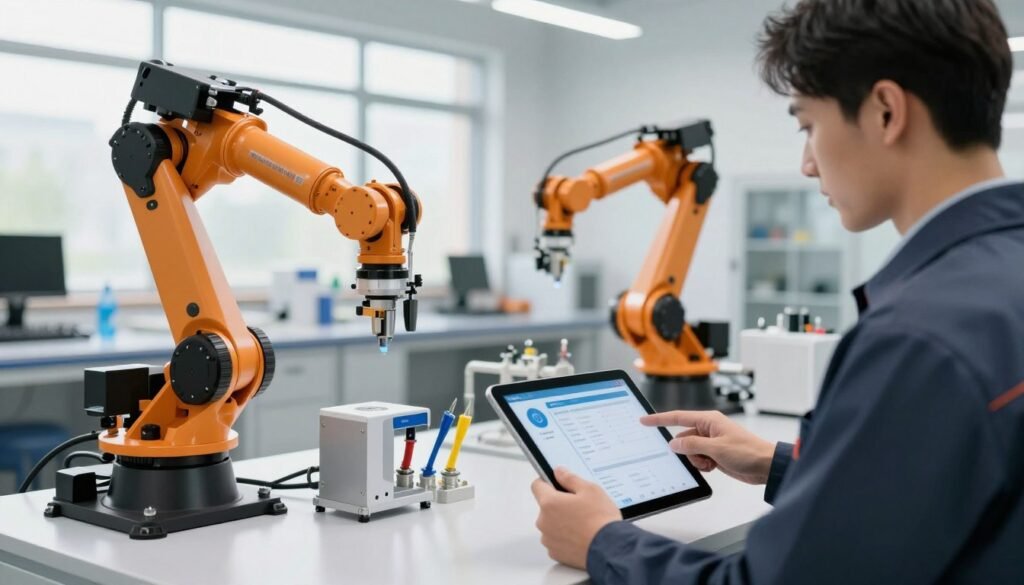
Running a successful plumbing business today means more than just fixing pipes. It involves managing schedules, tracking invoices, and following up with customers. These administrative tasks can eat up hours every single week.
Modern digital solutions are changing the game for trade professionals. They automate the repetitive work that slows you down. This lets you concentrate on the skilled, hands-on jobs that grow your reputation and revenue.
I’m Nick Lau, and I published this guide on February 13, 2026, to help you navigate this evolving landscape. I’ve seen firsthand how these innovations let tradespeople work smarter, not harder. Adopting the right technology is now essential for staying competitive.
My goal here is simple: to give you a clear overview of the most effective systems available. By implementing them, you can streamline daily operations. You’ll free up valuable time to focus on what you do best.
Key Takeaways
- Administrative tasks like scheduling and paperwork consume significant hours each week.
- Advanced digital solutions automate these repetitive processes instantly.
- Adopting modern technology is crucial for maintaining a competitive edge in today’s market.
- These systems enable professionals to work smarter by focusing on skilled trade work.
- This guide provides a comprehensive look at effective tools to streamline daily business operations.
- Implementing the right solutions leads to better workflow and long-term business growth.
Introduction: The Rise of AI in Plumbing
Gone are the days when a plumber’s success was measured solely by wrench skills and grit. The industry is moving away from manual systems toward data-driven strategies. These strategies improve first-time fix rates and overall service quality for customers.
My Journey with AI in the Plumbing Industry
As Nick Lau, a content lead for Upfirst.ai, I emphasize this is not a gimmick. It’s a game changer for modern professionals. I’ve found that starting small by testing one specific tool for a month helps you measure the return on investment effectively.
This practical approach builds confidence. It proves the value of new software before a full rollout.
The Need for Innovation in Traditional Trades
Traditional trades face increased pressure to modernize. Our infrastructure ages, and demand for high-efficiency water systems rises globally. My experience shows that training your crew through lunch-and-learn sessions is the best way to overcome resistance.
By embracing these changes, you spend less time on paperwork. You gain more time solving complex problems for residential and commercial clients. This shift is crucial for any business aiming to stay competitive.
Maximizing Efficiency with AI tools for plumbers
Plumbing professionals can now unlock unprecedented levels of productivity through strategic technology adoption. Recent trials, like the Intelligent Water Systems Challenge 2024, prove the point. AI-based algorithms achieved an 80-90% success rate in identifying leaks.
I recommend a simple start. Pick your biggest pain point. For many, it’s handling night calls. Test an automated answering service for one month. This focused trial lets you measure real results.
True efficiency gains come from layering multiple systems. Imagine watching leak-detection alerts while your quoting software cranks out accurate estimates. These integrated solutions pay for themselves fast.
| Task | Manual Process | Automated Solution |
|---|---|---|
| Job Scheduling | Phone calls, paper calendar | Smart dispatch software |
| Creating Estimates | 30+ minutes per quote | Instant, accurate pricing |
| Leak Monitoring | Physical inspection | Real-time sensor alerts |
| After-Hours Calls | Missed opportunities | 24/7 virtual assistant |
By automating routine work, you save significant time. This used to take up half an hour per quote. You can now deliver a level of professionalism that wins more referrals.
My analysis shows the most successful contractors integrate these technologies. They handle more jobs in significantly less time. This builds a stronger business reputation for 2026 and beyond.
AI-Powered Leak Detection: Preventing Costly Water Damage
Proactive leak detection is no longer a luxury but a critical component of modern plumbing service. Silent leaks within walls or under slabs can cause immense damage before anyone notices. This technology shifts your role from reactive repair to proactive protection.
How Smart Sensors and Machine Learning Work
These advanced systems use smart sensors to monitor a home’s water supply. They analyze flow rates and pressure patterns to establish a normal usage profile. Machine learning algorithms then detect the smallest anomaly.
For example, Moen Flo tracks flow-rate data. It sends real-time push notifications for drips. LeakBot listens for pressure changes at the meter. It builds a profile to alert you before a major leak occurs.
Specialized apps analyze sound, moisture, and usage patterns. This detection happens long before a customer’s floor warps. The goal is to catch issues at their earliest stage.
| System | Primary Method | Key Feature |
|---|---|---|
| Moen Flo | Flow-rate monitoring | Real-time homeowner alerts |
| LeakBot | Pressure anomaly listening | Builds normal usage profile |
| AI-Powered Apps | Sound & moisture analysis | Early pattern recognition |
Real-Time Alerts and Action Plans for Early Intervention
Instant alerts are the core benefit. You and the homeowner get a ping the moment a problem is suspected. This allows for immediate action.
Data-driven diagnostics pinpoint the leak’s location with high accuracy. You avoid hours of guesswork. This prevents costly call-backs and frustrated clients.
Having a response plan is essential. These systems identify weak points in pipes and fixtures. Early intervention saves your clients from the high costs of major water damage. It builds immense trust in your plumbing expertise.
AI-Driven Quoting & Estimating Solutions for Accurate Job Pricing
The estimating process, once a tedious chore, is now a strategic advantage for modern contractors. It moves you away from guesswork and manual spreadsheet calculations.
Streamlining Estimates with Automated Platforms
Modern software platforms analyze historical data to build accurate estimates. For example, ServiceTitan’s system calculates required labor hours and materials for standard jobs like water heater swaps.
Jobber’s Smart Quotes suggests line items based on property details. It can even flag upsell opportunities for repair packages. This automation ensures you cover all costs for fittings and fixtures while building in profit.
Case Studies: Faster, More Reliable Quotes
The results are dramatic. Maxwell Henderson cut 80% of the time his team spent on takeoffs. This freed them to focus on larger project bids.
Beam AI helps contractors triple their bidding capacity. It extracts plumbing quantities from plans in days. Danell Zarrelli increased output from 2 estimates a week to 8 or 9.
Emma Peters reduced her takeoff estimating from five days down to one. These accurate estimates win more projects without hiring extra staff.
Smart Inventory Management and Scheduling Dispatch
Smart logistics systems transform inventory and dispatch from a headache into a strategic asset. They connect your warehouse stock to your field team, creating a seamless operational process.
Automated Stock Tracking and Reordering
Forget manual spreadsheet counts. Modern software like Sortly uses image recognition to catalog materials. It tracks serial numbers and predicts reorder points based on usage velocity.
This is vital for plumbing contractors with large warehouses. Platforms like Upkeep analyze your stock. They flag slow-moving parts that tie up cash. This ensures you always have the right fittings and pipes on hand.
Optimizing Job Routes for Time Efficiency
Dispatch efficiency is another major gain. Housecall Pro’s engine matches jobs to techs based on location, skill, and availability. It generates an optimized route each day.
Your team spends more hours wrenching and fewer minutes driving. Accurate ETA texts boost customer satisfaction. This modern management prevents mid-job runs to the supply house for missing fixtures.
| System | Primary Function | Key Benefit for Contractors |
|---|---|---|
| Sortly | AI-Powered Inventory Tracking | Predicts reorder points for fittings & materials |
| Upkeep | Warehouse Analytics | Highlights slow-moving stock to free up cash |
| Housecall Pro | Intelligent Job Dispatch | Optimizes daily routes to reduce drive time |
Enhancing Customer Interaction with AI-Powered Services

In today’s fast-paced market, immediate and intelligent communication sets top-tier plumbing contractors apart. The first impression often determines whether you win a job. Modern solutions handle this critical process with remarkable efficiency.
Virtual Assistants and AI Chatbots in Plumbing
Intelligent chatbots transform how you engage potential clients. For instance, Drift’s systems, when linked to your CRM, skyrocket buyer interaction. Early trials showed engagement multiplied by seven times.
This software screens out irrelevant requests automatically. Your office team then focuses on complex repair tickets. Every callback becomes a qualified lead, saving precious hours.
24/7 Answering Services and Lead Qualification
Services like Upfirst field every call, day or night. They qualify leads and book appointments directly into your schedule. You receive complete summaries via SMS and email.
This ensures you’re always informed about emergencies or new opportunities. Customer data flows seamlessly into your management system. The handoff is smooth, improving the client experience.
You never miss a critical call, even at 3 a.m. This reliability builds a sterling professional reputation. It’s a powerful tool for growth.
The Evolution of Plumbing: From Manual Systems to AI Integration
Today’s plumbing landscape has transformed, moving beyond physical labor to incorporate predictive analytics and smart diagnostics. The profession now integrates with complex home and commercial automation. This shift demands a new skill set from modern professionals.
Adapting to a Digital Future in Plumbing
Advanced robotic systems can navigate tight spaces to inspect and conduct minor repairs autonomously. This is crucial for difficult-to-access pipes. It represents a leap from simple pipe-and-wrench solutions.
Roy Cabrera of Pilkington Construction Co. recorded 1.5x business growth after adopting advanced takeoff and estimating software. His story highlights the tangible benefits of digital integration for contractors.
Predictive models forecast potential breakdowns using water usage patterns. This allows for scheduled maintenance at optimal times, slashing emergency repair expenses. It’s a proactive plan for managing costs.
Augmented reality headsets guide technicians in real time. They overlay instructions directly onto physical fixtures and pipes for better accuracy. This process enhances precision on any project.
The role of the professional is evolving. Expertise now includes interpreting data-driven diagnostics to make informed decisions. This adaptation is essential for managing modern water systems and preventing waste.
Navigating Adoption Challenges and Future Trends in AI-Driven Plumbing

Successfully implementing new digital solutions hinges on overcoming two primary challenges: financial justification and personnel training. The future of this trade depends on navigating these hurdles smartly.
Balancing Initial Investment with Long-Term ROI
Implementing smart solutions requires upfront capital. You invest in predictive analytics software and sensor networks.
For example, a platform like Beam AI has pricing starting around $18,000 per license annually. This is a significant business decision for contractors aiming to scale.
The key is to weigh this against long-term return. These systems reduce labor hours on estimating and prevent waste. They cut costs associated with materials and emergency repair jobs.
| Cost Factor | Manual Process | Smart System Impact |
|---|---|---|
| Job Estimation | Hours of spreadsheet work | Automated, accurate estimates in minutes |
| Leak Detection | Reactive, costly repairs | Proactive alerts prevent water damage |
| Inventory Management | Overspending on unused stock | Optimized reordering saves cash |
| Routine Maintenance | Scheduled blindly | Data-driven plan extends fixtures life |
Training the Next Generation of AI-Enabled Plumbers
The human role remains central. Modern apprenticeships now teach smart sensor integration. Vocational schools incorporate IoT plumbing technologies into their curricula.
This training ensures the team uses advanced data as a decision-support tool. It never replaces skilled judgment on a complex project.
Models must be trained on diverse scenarios for accurate diagnostics. This is critical when integrating with old pipes and fittings.
Future trends include AI-driven water conservation. These strategies optimize usage in commercial buildings. They support sustainability by improving overall efficiency and management.
Conclusion
A new standard of service excellence emerges when technology handles the routine, freeing experts for complex challenges. This shift is redefining the plumbing trade. It ushers in an era of proactive maintenance and greater efficiency.
By leveraging smart diagnostics, you can lower repair costs and reduce emergency calls. Your role evolves from reactive problem-solver to strategic manager of modern water systems. This ensures client infrastructure stays resilient.
Adopting the right software is key. It streamlines estimating and creates accurate estimates for every project. This saves significant labor hours for contractors and their teams.
You gain more time to focus on skilled work with pipes, fittings, and fixtures. This approach minimizes waste and supports sustainable plumbing practices. The future belongs to those who adapt.