
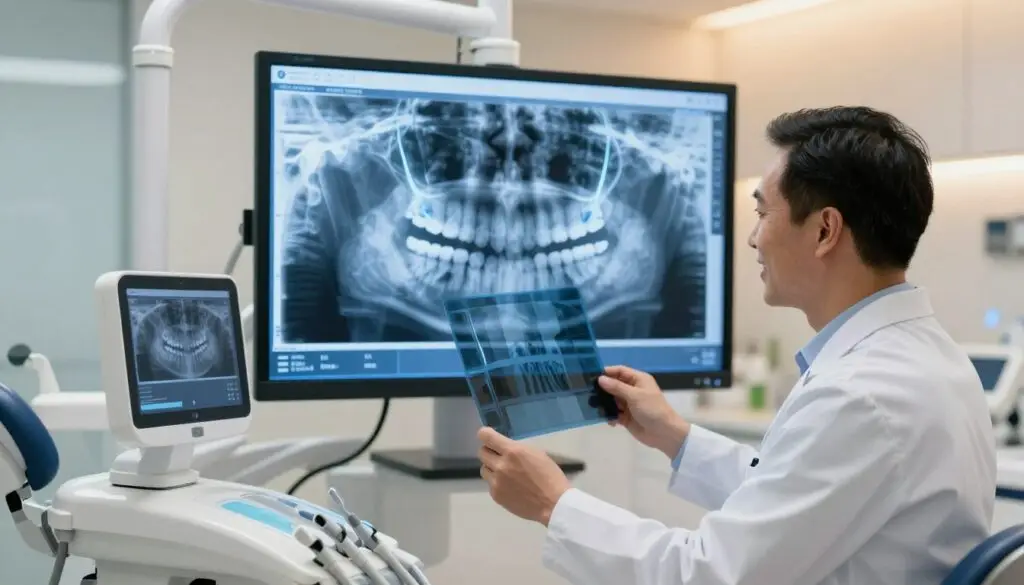
Welcome to this ultimate guide. I created it specifically for small dental clinics across the United States. Our field is changing fast. New diagnostic technologies are arriving all the time.
Accurate analysis of radiographs is foundational to good care. Research from the British Dental Journal highlights a key point. Understanding anatomical landmarks on panoramic images is critical. It helps prevent misdiagnosis in daily practice.
This guide offers a neutral, professional overview. I will show how modern systems can assist your clinical workflow. The right technology can improve your diagnostic accuracy. It also saves your team valuable time.
You will learn how to select and implement these solutions. The goal is to achieve better clinical outcomes. You can modernize your diagnostic and patient communication processes. Let’s explore how to maintain a high standard of care together.
Key Takeaways
- This guide is designed for small US dental clinics navigating new diagnostic technology.
- Understanding anatomical landmarks on x-rays is vital to avoid misdiagnosis.
- Modern systems can enhance diagnostic accuracy and clinical efficiency.
- Integrating these platforms can save time and ensure thorough radiograph review.
- The right solution helps modernize patient communication and clinic workflows.
- You will gain actionable insights for making informed decisions about your practice.
- The focus is on achieving better patient outcomes through smart technology adoption.
Introduction: Transforming Dental X‑Ray Interpretation
A quiet revolution is reshaping how dental professionals approach the critical task of reviewing patient scans. This shift moves us beyond traditional manual methods. It introduces automated, high-precision diagnostic support into daily clinical workflows.
I believe small clinics across the USA can gain a significant edge by adopting this technology. The right software streamlines daily operations and saves valuable time. This allows your team to focus more on direct patient care and communication.
Setting the Stage for AI in Dentistry
Artificial intelligence handles complex image analysis, reviewing details in radiographs with consistent accuracy. Early adoption helps dentists spot subtle conditions that a routine exam might miss. This leads to more informed clinical decisions and better patient outcomes.
Studies, like one from PMC/NIH, confirm that enhanced visual tools improve patient education and facilitate treatment plans. Integrating these systems fosters transparent communication. Your practice can maintain leading diagnostic quality and safety standards.
This guide will walk you through the essential features to evaluate. We will explore how these innovations support better workflows and modernize your clinic’s approach.
AI tools for dental x‑ray interpretation Overview
The landscape of dental diagnostics is evolving with the introduction of intelligent support systems. A systematic review of patient scans is essential. Research in the British Dental Journal confirms this prevents misdiagnosis of anatomical landmarks.
These modern platforms provide a consistent second opinion on every image. This enhances diagnostic quality and supports better clinical decisions.
What These Tools Offer
These systems offer a comprehensive suite for reviewing panoramic, periapical, and bitewing radiographs. They automate the initial screening process.
Your team saves significant time. This allows focus on complex cases needing human judgment. The ability to highlight subtle conditions improves patient outcomes.
| Aspect | Traditional Review | Platform-Assisted Review |
|---|---|---|
| Speed | Manual, time-consuming | Automated initial screening |
| Consistency | Varies by clinician | Uniform second opinion |
| Detail Detection | Relies on human focus | Highlights subtle findings |
| Training Utility | Limited to mentorship | Standardized learning tool |
| Cost Efficiency | Potential for missed details | Reduces diagnostic errors |
Relevance for Small US Dental Clinics
For small practices, these solutions are an affordable way to access expert-level support. No extra staff is needed.
Seamless integration with your existing management software keeps data organized. This streamlines clinical workflows.
They are excellent for training new clinicians. Every dentist can maintain high care standards. This leads to better patient education and treatment plans.
Benefits of AI in Dental Imaging for Small Clinics
Two primary benefits stand out when evaluating these platforms: enhanced clinical precision and improved patient dialogue. For a small practice, these advantages translate directly into better outcomes and a stronger competitive edge.
Enhanced Diagnostic Accuracy
These systems provide a consistent second layer of analysis. They help clinicians identify subtle conditions like early-stage caries and bone loss with remarkable reliability.
This elevates the overall diagnostic quality of your practice. It ensures no critical findings on radiographs are overlooked during a busy day.
Streamlined Patient Communication
Visual aids transform consultations. Annotated images make complex dental issues easy for patients to understand. This significantly improves their education.
When individuals see the evidence on their own image, they are more likely to accept proposed treatment plans. This builds essential trust.
Align Technology data from 2025 indicates that 91% of surveyed doctors agree that using these visual tools contributes to higher patient trust.
This artificial intelligence support streamlines your workflows. It fosters transparent discussions that strengthen long-term patient relationships.
Key Features and Capabilities of AI Dental Imaging Software
These systems transform raw radiographic data into actionable clinical insights through several key tools. For example, platforms like VideaAI are FDA-cleared to automatically review routine scans. This includes bitewings and panoramic radiographs to spot treatment opportunities.
Radiograph Analysis Across Modalities
Modern software provides robust analysis across all common imaging types. It handles panoramic, periapical, and bitewings for comprehensive coverage.
This ensures no findings are missed, regardless of the modalities your practice uses daily. Consistent review supports reliable clinical decisions.
Before/After Image Generation and Editing
High-quality before-and-after image generation is a powerful feature. I recommend it for patient motivation and clinic marketing.
The best solutions offer a seamless interface for editing and exporting these images. You can use them in presentations or social media to showcase potential treatment outcomes.
Annotation and Patient Education Tools
The ability to add clinical notes directly to an image is invaluable. It helps create professional reports for specialists.
More importantly, these annotations form the basis of customized education materials. Showing patients visual evidence improves their understanding and trust.
This artificial intelligence integration turns complex radiographs into clear conversation starters.
Enhancing Diagnostic Accuracy with Advanced AI Technologies
The core strength of modern diagnostic platforms lies in their underlying computational architecture. Research, such as the work from the Ateneo Laboratory for Intelligent Visual Environments, demonstrates systems achieving 98.2% accuracy in identifying tooth and sinus structures.
This high precision directly translates to more reliable clinical findings and better patient outcomes.
Deep Learning and Convolutional Neural Networks
These platforms use convolutional neural networks, a form of deep learning. The model is trained on massive datasets of dental images.
It learns to recognize complex patterns that are often invisible during a standard review. This allows for the identification of subtle lesions and anatomical details with remarkable consistency.
| Metric | Traditional Analysis | CNN-Based Analysis |
|---|---|---|
| Accuracy Rate | Subject to human variance | Exceeds 98% for structure ID |
| Pattern Recognition | Limited to visible features | Detects subtle, complex patterns |
| Consistency | Can fluctuate with fatigue | Uniform across all cases |
| Data Utilization | Relies on individual experience | Learns from vast image datasets |
Accurate Detection of Caries and Bone Loss
I have observed these networks excel at spotting early caries and periodontal bone loss. They provide a dependable second opinion for every analysis.
Early detection enables more conservative treatment plans, preserving healthy tooth structure and improving long-term oral health.
This artificial intelligence support significantly reduces the risk of misdiagnosis. It flags potential issues on radiographs that a busy clinician might overlook.
You can trust this advanced technology to deliver the detailed insights needed for confident decisions with your patients.
Streamlining Dental Workflows and Practice Management
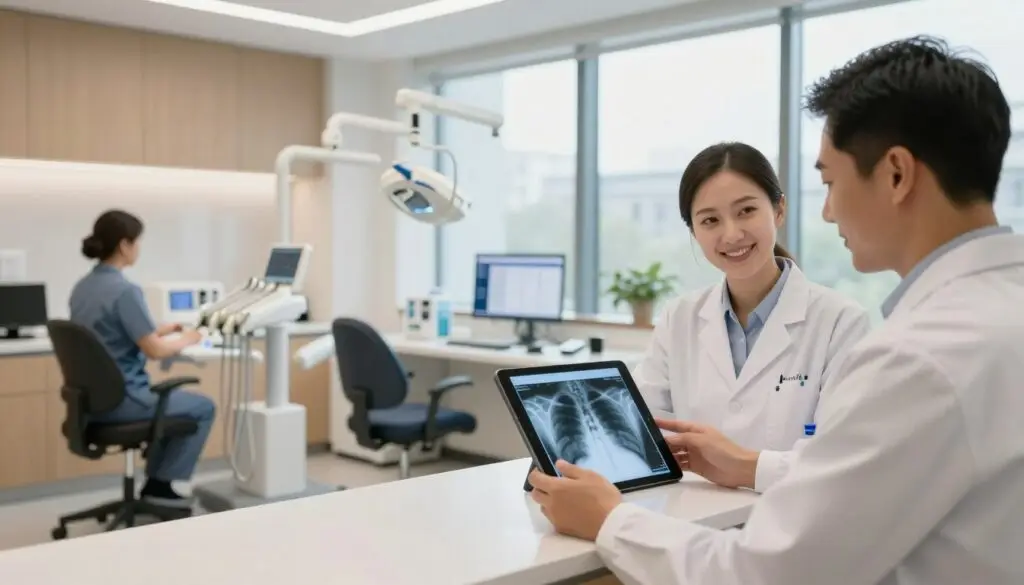
For small practices, the true value of modern technology is realized when it effortlessly merges with existing workflows. This seamless connection transforms daily operations.
It reduces administrative burdens and lets your team focus on care. Effective integration is the key to unlocking these efficiencies.
Workflow Integration with Existing Systems
Linking your diagnostic software with practice management platforms like Curve Dental is essential. Solutions like Dentrix Detect AI offer objective analysis that fits directly into clinical workflows.
This ensures all patient data is centralized and easily accessible. Your clinicians save significant time previously spent on manual tasks.
You can learn more about optimizing office operations in our guide on improving dental practice management.
Time-Saving Diagnosis and Reporting
I have found these platforms automate the diagnostic reporting process. Dentists can quickly review and approve standardized reports.
This streamlines the entire diagnostic workflow. It leads to a measurable reduction in chair time.
My analysis suggests clinics that prioritize this integration see higher productivity. They dedicate more energy to improving patient outcomes.
| Metric | Manual Process | Integrated Workflow |
|---|---|---|
| Report Generation Time | 5-7 minutes | 1-2 minutes |
| Data Centralization | Multiple systems | Single platform |
| Diagnostic Consistency | Variable | Standardized |
| Administrative Burden | High | Reduced |
Integrating AI into Clinical Decision-Making
Clinical decision-making is elevated when radiographic insights are available in real-time during patient discussions. This collaborative approach transforms how dentists formulate and communicate treatment plans.
I believe the best method is to use these systems as a supportive partner. They enhance your ability to make informed clinical decisions with confidence.
Real-Time Radiograph Analysis
Integrating these platforms into your consultation workflow allows for immediate analysis. This provides a second opinion right at the point of care.
When clinicians display live findings on screen, it builds greater trust. Patients can see the evidence supporting their proposed care.
This real-time feedback loop is powerful. It turns complex radiographs into clear, actionable conversation starters.
Case Studies from US Small Clinics
Evidence from small American practices shows this technology helps communicate complex details effectively. It leads to more consistent outcomes and higher satisfaction.
A survey of 24 doctors in Europe found that 91% saw increased treatment acceptance for restorative procedures when using these visual aids.
My research confirms these systems provide the necessary data to justify care. This makes discussions with both patients and insurance providers smoother.
| Aspect | Traditional Decision-Making | Integrated AI Support |
|---|---|---|
| Speed of Insight | Delayed, post-consultation review | Immediate during consultation |
| Clinician Confidence | Relies on memory and notes | Backed by real-time data analysis |
| Patient Trust | Built on verbal explanation alone | Strengthened by visual evidence |
| Treatment Acceptance Rate | Variable, based on persuasion | Higher, as shown in case studies |
By leveraging these insights, your clinical decisions are backed by the latest technology. This collaborative model ensures better outcomes for your practice.
Improving Image Quality and Patient Education with AI
The clarity of a radiographic image directly influences both diagnostic confidence and patient comprehension. Modern artificial intelligence systems enhance visual communication by refining the very foundation of diagnostics.
They normalize lighting and contrast to ensure every detail is visible. This improved quality is a key advantage for accurate analysis.
Effective Visual Communication for Treatment Plans
I have found that effective visual communication is the cornerstone of successful patient education. This is especially true when explaining the need for complex treatment plans.
Align Technology research indicates that 95% of doctors agree these platforms help them communicate oral health conditions and treatment options effectively.
By using these systems to generate clear, annotated images, you help individuals visualize their conditions. They can better understand the benefits of proposed care.
| Aspect | Traditional Image Review | AI-Enhanced Processing |
|---|---|---|
| Detail Visibility | Limited by original capture | Optimized lighting & contrast |
| Contrast Consistency | Variable | Normalized automatically |
| Need for Retakes | Higher due to poor quality | Minimized, reducing radiation exposure |
| Patient Comprehension Aid | Basic image only | Clear, annotated visuals |
These systems help reduce radiation exposure. They ensure images are captured correctly the first time.
My analysis shows patients are more likely to follow through with their treatment when they have a clear visual understanding. You can use these high-quality images to create educational handouts.
Prioritizing visual communication creates a more engaging experience. It empowers your patients to take control of their oral health.
Annotated Radiograph Interpretation for Accurate Treatment Planning
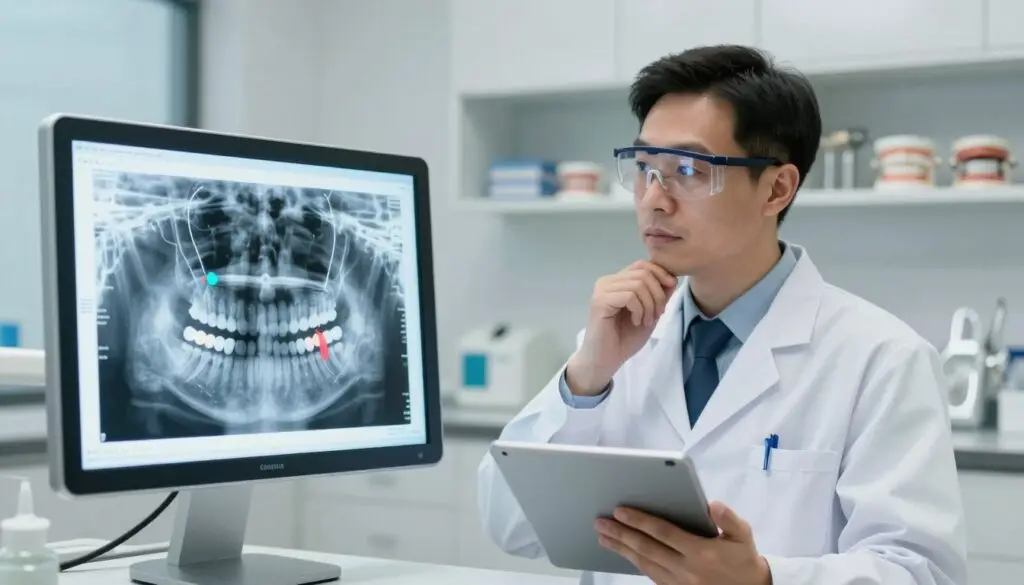
Precision in treatment planning begins with crystal-clear documentation of radiographic findings. Modern systems provide this through detailed annotations directly on the scan.
This creates an objective record that supports every clinical decision. It forms the foundation for effective care strategies.
Clinical and Educational Annotations
Platforms like those from Align Technology display findings as color-coded marks on the radiograph. They also use an interactive tooth chart for better clarity.
I have observed these annotations serve a dual purpose. They are a precise clinical record and a powerful educational tool.
Patients can see exactly what you are discussing. This visual evidence helps them understand the rationale behind your recommendations.
By highlighting specific areas, you ensure treatment plans are focused and easy to follow. This reduces the risk of miscommunication significantly.
My research indicates clinics using these features see improved accuracy in planning and documentation. You create a more professional and transparent practice environment.
Clear, annotated visuals demonstrate a commitment to high-quality, evidence-based care. They provide a shared language between the dentist, patient, and lab.
Economic Advantages and Value Proposition for Small Clinics
Beyond clinical benefits, these platforms deliver tangible economic advantages that strengthen a practice‘s bottom line. I believe the financial case for adoption is clear and compelling for independent clinics.
My analysis shows a direct link between smart technology use and improved fiscal health. You can achieve both cost savings and revenue growth.
Cost Efficiency and Reduced Overhead
Automating routine diagnostic tasks slashes administrative burdens. This reduces operational overhead significantly.
Your team spends less time on manual reviews and report generation. They can focus on high-value patient care instead.
| Economic Metric | Traditional Clinic | With Diagnostic Platform |
|---|---|---|
| Administrative Labor Cost | Higher, manual processes | Lower, automated workflows |
| Diagnostic Report Time | 5-7 minutes per case | Under 2 minutes |
| Error-Related Costs | Potential for missed findings | Reduced by consistent analysis |
| Resource Optimization | Staff tied to repetitive tasks | Team focused on patient care |
Revenue Enhancement Through Improved Outcomes
Revenue grows naturally from better clinical outcomes and higher treatment acceptance. Clear, annotated images help patients understand their needs.
Studies suggest that artificial intelligence-driven diagnostic precision can lead to higher insurance reimbursements. This rewards practices that demonstrate consistent and accurate documentation.
This tool provides the objective data needed to justify care plans. It builds trust and secures patient commitment.
Investing in this imaging support positions your practice for long-term growth. You create a more profitable and resilient business model.
Future Trends and Innovations in AI for Dental Imaging
Innovation continues to drive progress, with future developments aiming to make dental care more personalized and efficient. The next wave of advancements will bring smarter, more intuitive support to your clinic.
Staying informed about these trends helps you make strategic decisions. You can keep your practice competitive and ready for what’s next.
Emerging Technologies and Software Enhancements
Upcoming software will adapt to your specific practice needs. It will offer greater precision in diagnostic imaging.
I anticipate deeper integration with practice management systems. This will create a seamless flow of patient data.
These enhancements will provide more intuitive experiences for all clinicians. Your team will work with tools that feel like natural extensions of their expertise.
Anticipated Workflow and Diagnostic Improvements
Future workflows will become increasingly automated. This allows for seamless data exchange between imaging devices and your office software.
One key innovation will further lower radiation exposure. Systems will optimize imaging parameters based on individual patient anatomy.
Simultaneously, the clarity and quality of diagnostic images will improve. This supports more accurate analysis and better treatment plans.
| Aspect | Current Standard | Future Innovation |
|---|---|---|
| Workflow Integration | Manual data transfer | Seamless automated exchange |
| Radiation Exposure | Fixed parameters | Personalized, optimized dosing |
| Image Analysis | Standard detection | Predictive, adaptive models |
By embracing these trends, you ensure your practice remains a leader. You will deliver high-quality, technology-driven care.
Conclusion
Adopting modern diagnostic support is a decisive step toward elevating the standard of care in your clinic. I have shown how artificial intelligence enhances diagnostic accuracy and builds patient trust through transparent communication.
These platforms streamline daily workflows, saving your team valuable time. This allows you to focus on improving clinical outcomes and treatment plans.
The economic and clinical benefits make this an essential investment. It modernizes your practice‘s capabilities and imaging processes.
I encourage you to explore available options. Choose a solution that fits your unique goals.
Thank you for reading. I hope this guide provides the clarity needed for your digital transformation.