
Running a local clinic today means juggling countless tasks. I designed this guide to help you, the dedicated dentist or clinic owner, navigate the new world of dental technology.
Modern systems are changing how we connect with people and manage our offices. Staying ahead is no longer just an option; it’s essential for growth.
Data shows that by 2026, 35% of all dental practices have already implemented smart technology. This shift is reshaping daily operations. Adopting these solutions is key to remaining competitive and providing outstanding service.
My goal is to explain the best digital assistants for your office. These platforms help with marketing outreach, hygiene tracking, and affordable automation. They are built to save you precious time.
You will learn how advanced systems can improve diagnostic consistency. More importantly, they help build stronger, more trusting relationships with the people you serve every day.
This overview will show how these innovations are transforming the delivery of care. They make your practice more efficient and your patient interactions more meaningful.
Key Takeaways
- This guide helps local dentists and small clinics understand modern dental technology.
- Adopting smart systems is crucial to stay competitive, as 35% of practices already use them.
- Discover tools that manage marketing, hygiene assessment, and office automation affordably.
- Learn how these solutions save significant administrative time and improve diagnostic accuracy.
- See how technology fosters better, more connected relationships with your patients.
- Gain insight into how digital tools are transforming daily care delivery in dentistry.
Introduction and Overview
The journey toward a more efficient clinic begins with understanding the available digital resources. This guide serves as your map. I want to show you how modern systems can revolutionize your daily office operations.
Purpose of the Guide
My primary goal is simple. I aim to help you harness smart technology to transform your practice management. These platforms streamline how you connect with people and handle routine tasks.
According to McKinsey’s global healthcare insights, adopting such technology leads to better outcomes. It also increases revenue through more personalized care pathways. This is a powerful shift for any dental practice.
Target Audience: Local Dentists and Small Clinics
I am writing specifically for local dentists and independent clinic owners. If you want to leverage data-driven insights to personalize service, this is for you.
Integrating these systems saves valuable time on admin work. This lets you focus on the clinical treatment your patients deserve. The result is a more modern, efficient approach to dentistry.
AI Tools for Dental Patient Communication: Definition & Scope
At its core, this technology is about automating repetitive tasks to free up your team for more meaningful work. These are software platforms that use machine learning to handle routine interactions.
They enhance clinical workflows by integrating seamlessly into your daily operations.
What These Tools Are and How They Work
Think of them as cloud-based systems for your clinic. A platform like Curve Dental® helps teams elevate patient care.
It streamlines practice management by unifying imaging and patient data. This integration creates a smoother workflow for your entire staff.
Your team saves significant time on administrative duties. This allows a greater focus on clinical excellence.
The Role of AI in Enhancing Patient Communication
The software acts as a virtual assistant. It manages appointment scheduling and handles message responses.
This lets your front office concentrate on delivering outstanding care. By analyzing historical data, these systems can suggest personalized treatment plans.
These recommendations improve the overall experience for your patients. I believe grasping how this communication aid functions is vital.
It is the first step for any dentist aiming to modernize their practice and provide superior dentistry.
Key Benefits for Dental Practices
These innovations are not just about convenience; they provide measurable gains in accuracy, efficiency, and patient relationships. The advantages for your clinic generally focus on two core areas: enhancing how you connect with people and improving clinical operations.
Streamlined Patient Engagement
Automated systems ensure individuals stay updated about their appointments and planned procedures. This consistent contact builds trust.
It directly leads to more accepted treatment plans. Your patients feel more involved in their own care journey.
Improved Diagnostic Accuracy & Workflow Efficiency
A 2023 article in Dentistry highlighted remarkable studies. Software detected dental restorations on X-rays with 97.6% accuracy and identified caries with 97.1% accuracy.
This level of precision allows for much earlier identification of concerns like bone loss. You can address oral health issues proactively.
Automating manual charting saves significant time. Your team can then focus entirely on delivering exceptional care.
| Benefit Area | Primary Impact | Measurable Outcome |
|---|---|---|
| Streamlined Engagement | Enhanced patient communication | Higher case acceptance for treatment plans |
| Diagnostic Accuracy | Superior analysis of clinical data | Early detection of decay or bone loss |
| Workflow Efficiency | Automated administrative workflows | More time for direct patient care |
Exploring Top AI Tools for Dental Patient Communication
Modern dental platforms combine sophisticated imaging analysis with automated office tasks. I want to highlight specific solutions that can elevate your clinic’s performance.
Main Features and Functionality
Consider Planmeca Romexis® with Pearl’s Second Opinion®. It automatically reviews 2D X-rays for pathologies like caries and periapical radiolucency. Its accuracy exceeds 90%.
These systems also handle routine tasks. Automated appointment scheduling and voice-activated charting save valuable time. They allow for rapid interpretation of complex images.
This helps you identify cavities and bone loss with confidence. Better visual aids improve patient education.
Pros, Cons, and Best-Suited Applications
The primary advantage is enhanced diagnostic accuracy and workflow efficiency. Your team gains more time for direct care.
A potential drawback is integration details with existing practice management software. Evaluate this carefully.
I recommend these top tools for practices seeking to improve treatment plan acceptance. They are ideal for clinics focused on proactive dentistry.
Real‑World Use Cases and Comparative Analysis
The proof of any platform’s value lies in its real-world application within busy dental environments. Seeing how other offices succeed provides a clear blueprint for your own adoption.
Case Studies from Dental Practices
I reviewed several clinics using modern systems. Their results are compelling.
One study showed predictive models forecasting orthodontic outcomes with 73% accuracy. This enhances planning for all clinicians.
More importantly, these offices reported a marked rise in case acceptance. Visual simulations made complex procedures easy to understand.
“The visual aids transformed our consultations. People finally saw what we were explaining,” shared a clinic owner from Ohio.
This approach to patient education builds trust. It directly leads to more accepted treatment plans.
Comparison Table: Feature, Pricing, and Integration
Choosing the right solution requires a side-by-side look. Integration with your current software is the most critical detail for long-term efficiency.
| Platform | Key Features | Integration Notes |
|---|---|---|
| SmartChart AI | Automated charting, visual treatment planner | Seamless with major practice management systems |
| ImageAssist Pro | X-ray analysis for diagnostic accuracy | Requires API setup; strong support available |
| EngageFlow | Automated reminders, educational content library | Cloud-based; works alongside most platforms |
These top tools demonstrate that the right technology can save time and improve the quality of care for your patients.
Pricing, Features, and Pros & Cons Overview
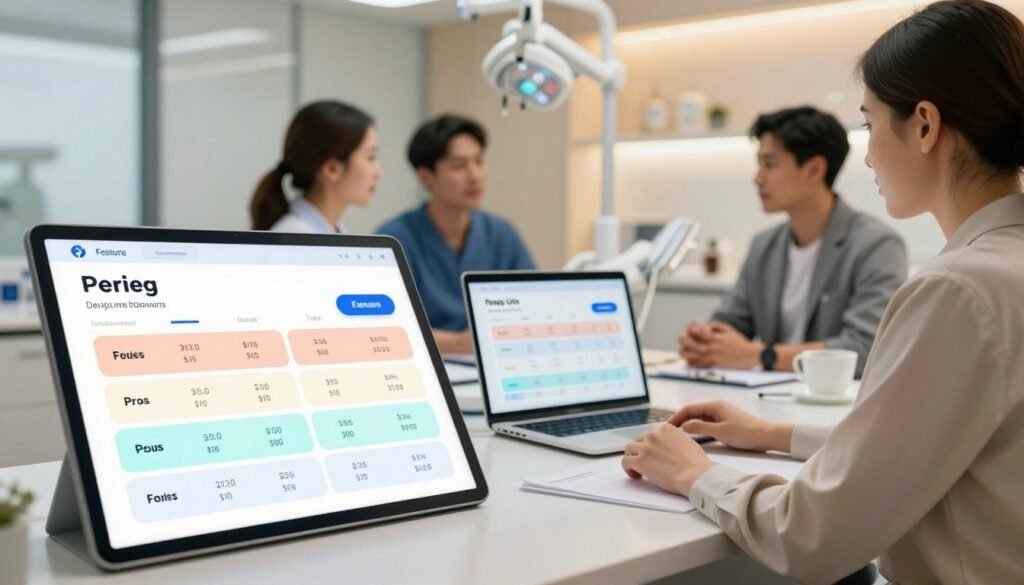
The decision to adopt innovative software hinges on understanding its pricing tiers, standout features, and inherent trade-offs. I want to provide a clear framework for your evaluation. This overview cuts through the noise to highlight what truly matters for your clinic’s growth.
Pricing Structures and Value
When reviewing these platforms, consider both upfront costs and long-term value. Subscription models vary from per-user monthly fees to annual clinic licenses.
Investing in a system that streamlines practice management can save time and reduce administrative overhead. This justifies the expense for many dental practices.
Feature Highlights and Limitations
Core functionalities often include automated scheduling, patient education modules, and advanced imaging analysis. For instance, DetectNet plays a crucial role by enhancing diagnostic precision through the analysis of complex imaging data for dental implant planning.
However, some solutions may have limitations in billing integration or require specific hardware. Understanding these details is key.
Who Each Tool Is Best For
Your clinic’s specific needs dictate the best fit. A platform with robust visual aids is ideal for practices focused on improving case acceptance.
Those seeking efficiency gains should prioritize workflows automation. I aim to give you the insights to match the technology to your dentistry goals, ensuring better patient care and treatment outcomes.
Integrating AI Tools with Your Dental Practice
Successfully incorporating new software into your clinic demands a strategic approach to workflow integration. This process is about more than just installing a tool; it’s about weaving new technology into the fabric of your daily operations.
Implementation Tips and Workflow Automation
I recommend starting with small, manageable steps. This ensures your existing practice management systems remain stable. A clear plan for automation is crucial for staff to adapt quickly.
Data security is paramount. Solutions like BastionGPT operate under a Business Associate Agreement. This keeps patient data protected and your practice compliant.
“We automated our appointment confirmations first. It freed up hours each week for our front desk,” noted a manager from a Midwest clinic.
Real‑World Integration Examples
Many dental practices see immediate gains. Automating scheduling and billing tasks significantly improves daily efficiency. This lets your team focus on delivering better patient care.
These tools streamline complex workflows. The result is a noticeable save time on administrative details.
| Integration Focus | Recommended Action | Expected Outcome |
|---|---|---|
| Data Security | Choose HIPAA-compliant platforms with BAAs | Protected information and trust |
| Workflow Automation | Begin with one repetitive task, like reminders | Increased staff efficiency and morale |
| Staff Training | Provide hands-on sessions during slow periods | Smoother adoption and better communication |
By focusing on these integration strategies, practices enhance their overall dentistry services. This leads to more effective treatment and happier patients.
Conclusion
Ultimately, the goal is to enhance every aspect of your service, from diagnosis to ongoing relationships. Adopting smart technology empowers dental practices to achieve remarkable accuracy and operational efficiency.
By automating complex workflows, you save precious time on administrative details. This lets your team focus entirely on delivering exceptional care and treatment.
The most successful practice blends human expertise with advanced systems. This balance fosters trust and improves case acceptance rates.
I encourage you to begin your journey today. Select a tool that aligns with your clinic’s goals to provide the best possible dentistry.